OVGU Biodiversity Lab: Nature and people together on campus
This project focuses on promoting biodiversity on the OVGU Campus, as well as unity between nature and people.

The OVGU Biodiversity Lab on the campus of Otto von Guericke University Magdeburg combines nature, science, and practice. Directly in front of the EU GREEN Pavilion, a species-poor lawn is gradually being transformed into a colorful natural space that invites visitors to relax, explore, learn, and engage.
Nature conservation from ambition to action
The EU GREEN project Insectopia aims to create eutopias (Greek for “good places”) for insects on the nine partner campuses of the alliance partner universities. The interdisciplinary team O-Bee-GU (Staying Alive), consisting of Stefan Weidner (M.Sc. Information Systems), Anna von Busse (M.A. Peace and Conflict Studies), and Ian Averkamp (M.Sc. International Management), submitted the project application. They share the believe that biodiversity is not a minor concern, but a cornerstone of sustainable living.
Personal experiences, such as the transformation of a backyard into a natural garden, and the desire for more green spaces and lively retreats on campus inspired the idea of creating this living lab: an open space of learning and exchange that promotes biodiversity and demonstrates the value of intact nature.
Ideal soil for co-created solutions
"When they hear the term ‘insect decline,’ many people automatically think of the non-native honeybee. However, thanks to the dedicated work of beekeepers, this species is not threatened with extinction. What many people don't know is that there are thousands of wild bee species that are responsible for about half of all pollination. Of the 600 wild bee species found in Germany, about half are threatened with extinction or critically endangered," explains Stefan. Together with the university garden MagdeGrün, the Magdeburg Wild Bee Alliance, and the Saxony-Anhalt Nature Conservation Youth, the three initiators are designing nature modules for a wide variety of habitats.
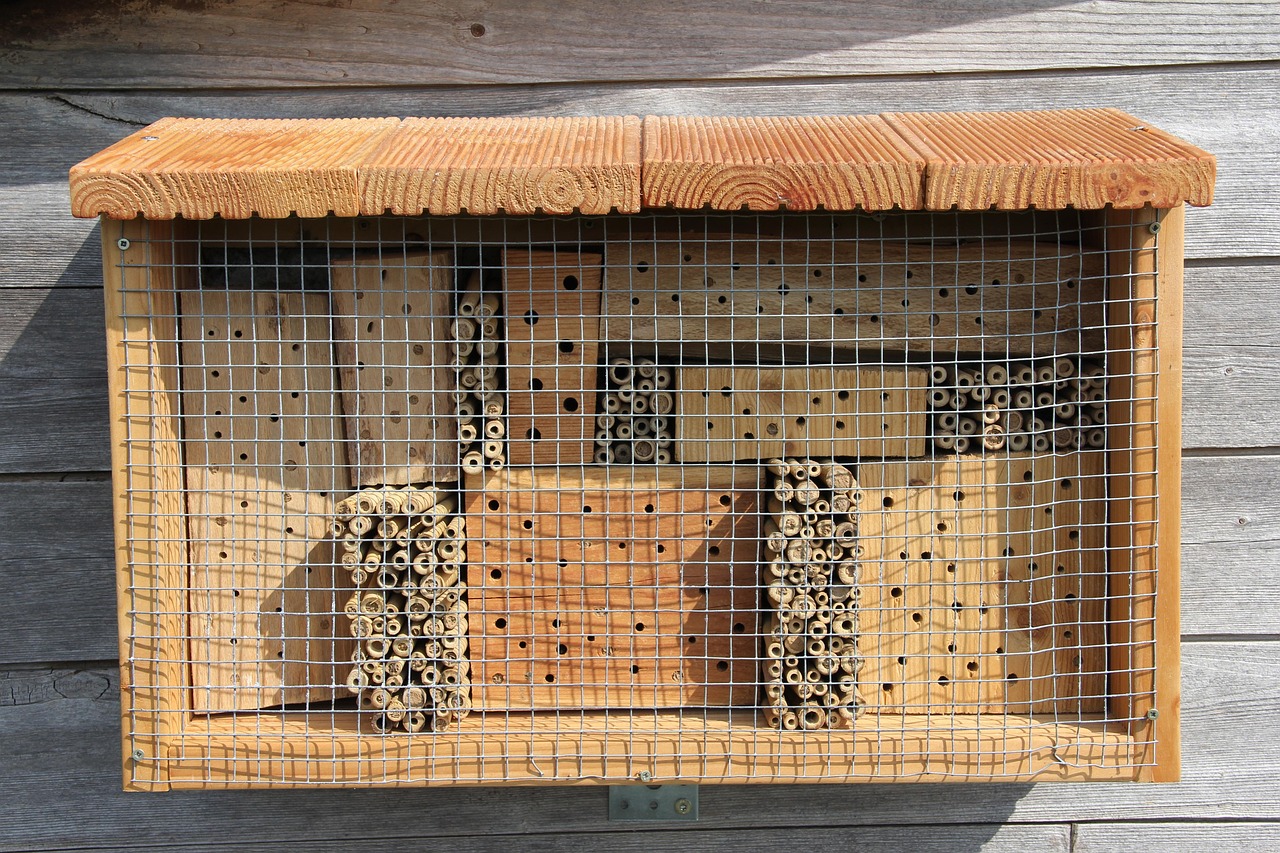
The project consistently focuses on natural and recycled materials: nutrient-poor soil with sand, gravel, and limestone promotes native plants; nesting tubes made of reeds or elderberry stems create suitable breeding grounds for wild bees. Many plants are donatedby citizens from their gardens, another example of the close cooperation between the university and the local community.
Little by little, the bird builds its nest
Since summer 2025, the EU GREEN team at OVGU has been working with interested Magdeburg residents to implement nature modules. Stefan is the team leader and is delighted that two modules have already been created for nutrient-rich soil, a so-called rich meadow, and for mineral substrate, a poor soil bed, which provide food and nesting sites for insects, reptiles, birds, and small mammals.
The OVGU Biodiversity Lab is a showcase project that will make the campus greener, livelier, and more attractive for students, staff, and visitors alike. It offers recreational spaces, strengthens identification with the campus, and at the same time raises awareness of one of the most pressing issues of our time: the protection of biodiversity.
For a sustainable future
In 2026, Magdeburg residents will once again be shown, either actively in workshops or passively through a free visit to the OVGU Biodiversity Lab, how easy it is to turn part of their garden into an easy-care nature observation site and thus personally combat insect decline. In the spring, a sandarium for wild bees that nest in the ground and a so-called beetle cellaro will be created to encourage people to replicate them at home.
“The total area of all gardens in Germany is roughly equivalent to the size of Germany's nature reserves. If only a fraction of this were to be redesigned, it could significantly promote biodiversity,” explains Stefan. Since many wild bees only have a range of a few hundred meters, the large number of such man-made ‘stepping stone biotopes’ helps the spread and strengthening of native insect populations.
In the long term, the project aims not only to improve living conditions for insects and other animal species, but also to contribute to developing the campus into a sustainable, inclusive, and open place of learning. It is a prime example of how the EU GREEN Alliance combines education, research, engagement, and sustainability in practice.
.png)


.jpg)